
Why Rabbi Jason is the Mitzvah Rabbi
Traveling Rabbi with a Torah for Bar/Bat Mitzvahs
Rabbi is a relationship term. It literally means “my teacher” (ravi in the Hebrew). I often share that definition with my students early on, sometimes even in our very first bar mitzvah or bat mitzvah tutoring session. It usually gets a nod, occasionally a raised eyebrow, and sometimes a thoughtful pause. That pause is where the real work begins. Just as you cannot be a doctor without patients, you cannot be a rabbi without students. Being a rabbi is not a title that exists in isolation. It only has meaning when there is a relationship built on trust, learning, and shared purpose.
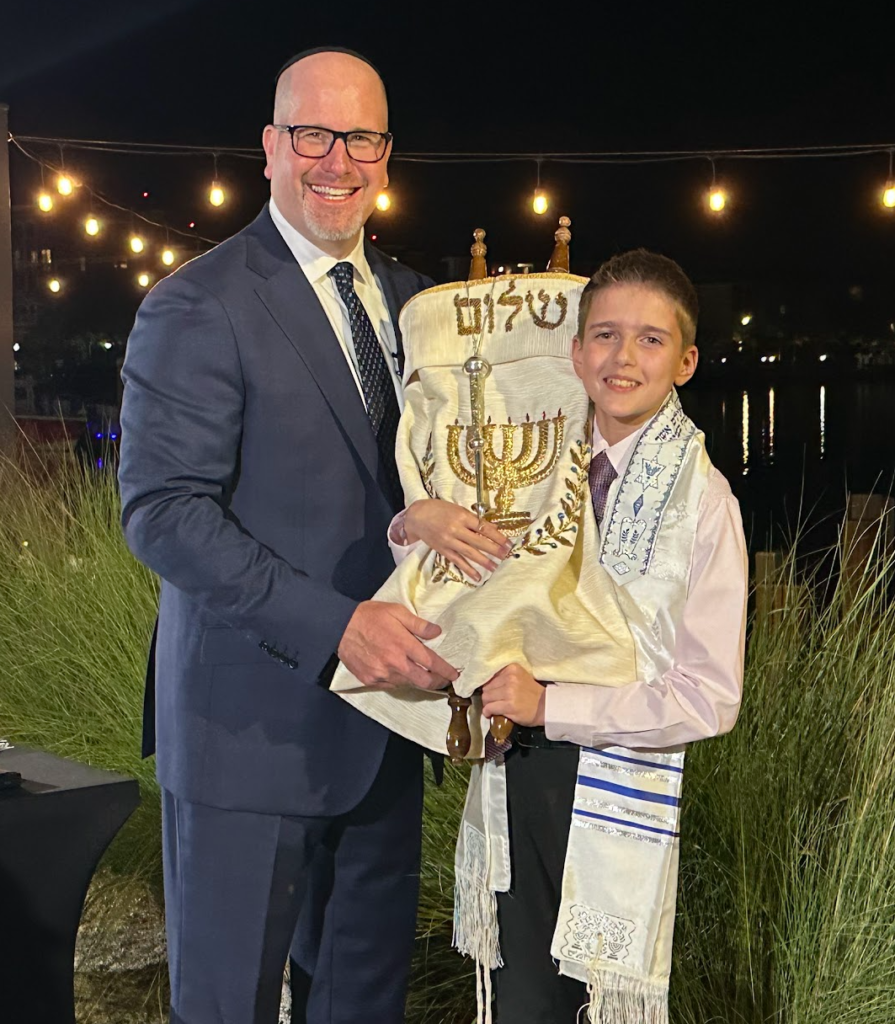 When I sit with a 12 or 13-year-old preparing for their bar or bat mitzvah, I am keenly aware that I am not just teaching prayers or correcting Hebrew pronunciation. I am stepping into a sacred role that Jews have valued for thousands of years. Rabbi is simply a refined way of saying “my teacher,” and teaching is at the heart of why I became a rabbi. I did not choose this path for authority or status. It chose me! It’s a calling and I began my studies in the rabbinical school of The Jewish Theological Seminary in New York City because I believe deeply in helping young people understand who they are, where they come from, and why their Jewish identity matters.
I tell my students that they are part of a chain. Not a chain that binds them or limits them, but a chain that connects them to generations who came before and generations yet to come. Every link in that chain matters. Their Jewish grandparents and Jewish great-grandparents were links in the unending chain as well. Their ancestors who crossed oceans, rebuilt communities, and held on to Jewish life against all odds were links. Now, it is their turn. Becoming a bar or bat mitzvah places them firmly into that ongoing story.
I am always clear with families and students about one important point. Becoming a bar or bat mitzvah is automatic. It is an age designation. Jewish law does not require Hebrew School tuition, a bat mitzvah party, a bar mitzvah service, or even a Haftorah reading. On a Jewish child’s thirteenth birthday, or twelfth for a bat mitzvah in many communities, the status changes whether anyone marks it or not. What makes the moment meaningful is not the calendar, but what we choose to add to it.
That is where ritual comes in. When we add intention, learning, prayer, and responsibility to the moment, we transform something automatic into something memorable and sacred. The bar or bat mitzvah ceremony becomes a way of saying, “This matters. You matter.” It becomes a moment where a Jewish young person can stand up and be seen as a contributing member of the Jewish people.
In my holy work, I want every student to see their place in the larger Jewish world. I want them to understand that Judaism is not something that happened long ago or only in textbooks. It is alive, evolving, and waiting for their voice. I want them to see me not as someone who simply prepares them for a single day, but as a guide, a teacher, and a mentor along the way.
Of course, we learn the practical skills. We study Hebrew. We chant the Torah and Haftarah. We talk through the structure of the service and the meaning of the prayers. But that is only the surface. The deeper work is helping a young person recognize, often for the first time in their life, that the world depends on them. Their choices matter. Their actions matter. Their Jewish identity matters.
I often tell my students that they are a spark of Torah. Not just because they read from a scroll, but because Torah only survives when it is carried forward by living people. They are the reason our ancestors fought to survive. They are the reason Jewish life endured through persecution, exile, and even the horrors of the Holocaust. They are the reason there will be a Jewish future at all.
This is why I find so much meaning in working with students at this age. Twelve and thirteen are tender years. There is curiosity, resistance, humor, insecurity, and growth all wrapped together. It is a privilege to be invited into that space. It is a responsibility I do not take lightly.
I am careful to explain that I am not a bar or bat mitzvah tutor. Tutors teach skills and then move on. I am a rabbi who cares deeply about helping families carry their Jewish heritage into the next generation. My work is about relationship, continuity, and meaning. It is about helping a young person stand at the edge of childhood and glimpse the responsibility and beauty of being part of Am Yisrael.
This is why I am the Mitzvah Rabbi. I have chosen to work with Jewish youth from all over the world, meeting them where they are and helping them make sense of what it means to be Jewish in the 21st century. In doing so, I am reminded again and again that rabbi truly does mean “my teacher.” And just as often, I find that my students are teaching me as well.